
Korean Fiction and Essays: -더라, -는 법이다, -은 나머지
Written Korean has a voice: -더라 reports what the narrator saw, -는 법이다 states how things go, -은 나머지 and -는 듯하다 colour the result. Not a grammar lecture.
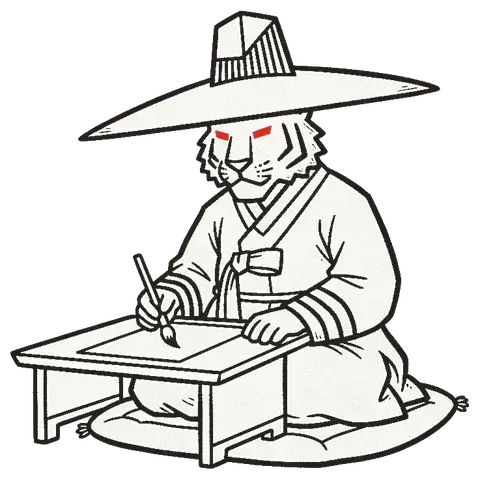
Spoken classroom Korean is 해요체. A story or an essay often is not. The page below is not a tour of four endings. It is the voice those endings make when they sit in a sentence.
The Korean lines are invented classroom prose. They are not a novel.
What the narrator saw: -더라
그 골목이 생각보다 좁더라.
That alley was narrower than I had thought.
-더라 is not a decoration on 었. It hands you something the narrator met. 좁았어요 states a past fact. 좁더라 says: I was there, and I am telling you now.
In a diary it sounds like a person. In a press release it sounds like the writer wandered into the wrong genre.
How things go: -는 법이다
사람은 오래 기다리면 배가 고픈 법이다.
People get hungry if they wait long enough. That is how it goes.
-는 법이다 is a general rule, not a Tuesday. Essays use it to step back from one scene and name a pattern. It is cousin to “that’s life,” not to a lab measurement.
If you only have one event, prefer a plain past. 법이다 wants the world, not a single bus.
After that state: -은 나머지
급한 나머지 문을 닫고 나왔다.
In the hurry, I shut the door and left.
-은 나머지 names the prior state, then the leftover act. The English “so” is too thin. The Korean packages cause as a leftover.
A calmer twin is -은 결과. 나머지 often carries heat: 기쁜 나머지, 당황한 나머지. If the result is a dry statistic, pick a drier connector.
Soft look: -는 듯하다
비가 곧 올 듯하다.
It looks as if rain is coming.
-는 듯하다 guesses from appearance. It is lighter than a board’s 오겠습니다 and cooler than café 올 것 같아요. Travel notes and fiction like it because the narrator can stay unsure without sounding like a forecast.
Keep the voices in their rooms
| Seat | Ending you will meet |
|---|---|
| This classroom | 해요체 |
| Notice, interview | 합니다체 |
| Story, essay, many columns | -더라, -는 법이다, -다 |
A column that opens in -다 and slips into 해요체 mid-paragraph is not bilingual. It is two rooms in one hallway. Keep the quoted line in one voice.
Do not paste 법이다 into a company apology. Do not paste 습니다 into a short story’s inner line unless the character is giving a speech. Read one page of a Korean essay and underline only these four. That sorting is the lesson.
Common questions
Should I write my homework in -더라?
Only if the assignment wants a narrator who saw something. A lab report or a 합니다체 notice does not. Match the seat.
Is -는 듯하다 just -을 것 같다?
Close. -는 듯하다 often guesses from how things look. -을 것 같다 is the everyday hedge. Essays like the lighter 듯하다.
Can I mix 해요체 explanation with these endings?
This page does: the teaching is 해요체, the quotes stay in written voice. Do not mix them inside one quoted line.
Are these only for novels?
No. Columns, travel notes, and TOPIK 54 essays borrow them. The test still wants 합니다체 or plain written -다 for the frame.
Sources
Written as educational material for Korean learners. Sources for the facts are below:
Practice & questions
Try a sentence with an expression from this lesson, or ask about anything you are still unsure of.
Guest comments appear after review. Existing member comments remain attached to their accounts.