
Korean Proverbs: Knowing One Is Not Using One
A proverb is a comment after a situation, not a speech. 고와야 and 하면 sit inside real lines. Here is where the same sentence sounds wrong.

A Korean proverb is a comment after something has already happened. Learners treat it as a speech. That is why a perfect line can still sound wrong.
The meanings below follow the National Institute dictionaries. The scenes are classroom scenes.
After a sharp tone
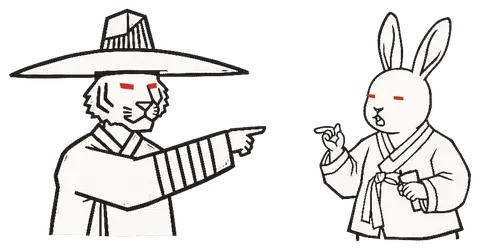
The basic dictionary says: if you speak and act well toward others, they do the same back.
가는 말이 고와야 오는 말이 곱다.
-아야/어야 sits in 고와야: only if the words going out are kind. The return is not a wish. It is what follows.
It lands after someone has already been sharp — a short tap, then you move on. It does not land as your entire interview answer. It does not land on a service-outage notice. Those rooms want 배우겠습니다 or 드려서 죄송합니다, not a poster.
When the person walks in
호랑이도 제 말 하면 온다.
-(으)면 is the 하면. Speak of them, and they appear. The dictionary also warns: do not bad-mouth someone just because they are out of the room.
It lands when the discussed person opens the door. The room laughs, then talks to that person. It does not land at a zoo, pointing at a real tiger. The animal is the costume, not the topic.
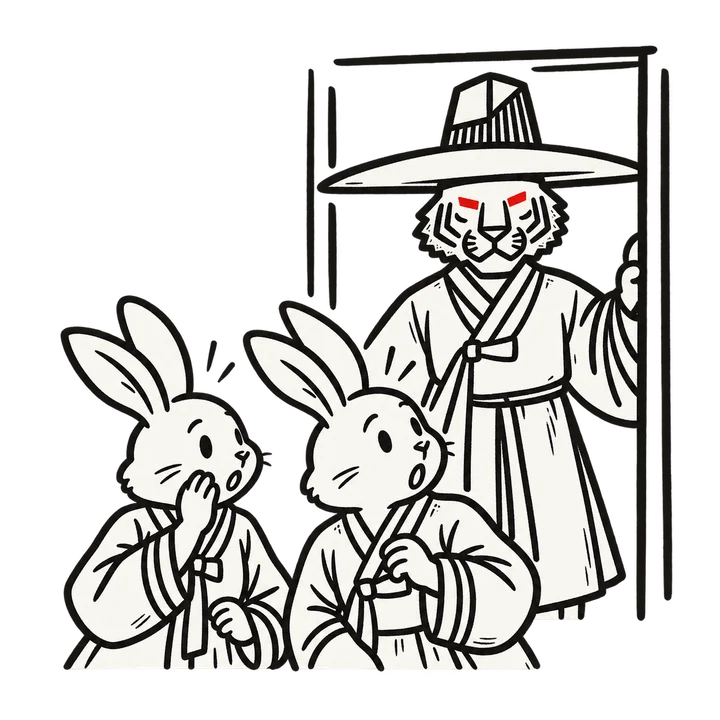
The ending -는다 (온다) is the plain written close. In speech you may hear 온대 / 와요. The proverb itself stays in the frozen shape.
Experts slip — not a humble close
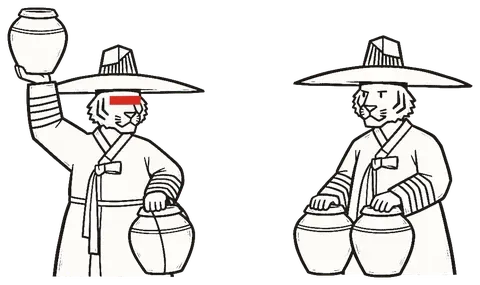
원숭이도 나무에서 떨어진다.
Same -는다. The dictionary sense is: even the skilled miss. It lands after a competent person has just made a small error, and you want to take the heat off. It does not land as your own interview humility. 아직 부족하지만 배우겠습니다 is the human dip. A monkey proverb about yourself can sound like a joke at the wrong desk.
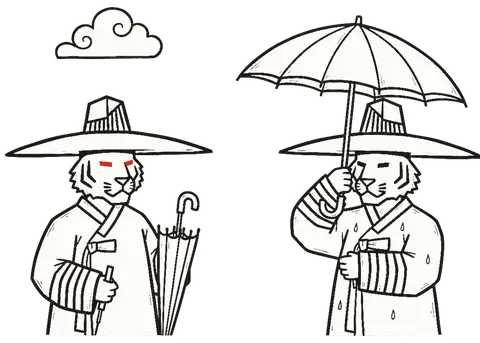
시작이 반이다 is the same family: a nudge to start, not a thesis statement. Fine in a study-group chat. Thin as the only sentence in a report.
Like a proverb, not as a proverb
속담처럼 들릴 수는 있어요. 그런데 지금 자리는 아니에요.
처럼 here is similarity: it sounds like a proverb. That is the test. If the line could be a poster on a classroom wall, and nothing in the room earned it, leave it off.
Wrong rooms, in short:
- Company apology
- First interview answer
- A whole TOPIK paragraph stitched from 속담
- Literal animals where the proverb meant people
Know two. Use them as one breath after a real moment. That is using one. A list of twenty is only knowing them.
Common questions
Should I collect fifty proverbs?
Collect two you can hear. Use them as a one-line comment, not as a paragraph. Recognition first.
Can I put a proverb in a TOPIK essay?
One, if the situation earned it. A string of 속담 reads like a list you memorised. Graders notice lists.
Is 내로남불 a proverb?
It wears four-syllable clothes. It is modern slang, not a classical 속담. Different lesson, different room.
What do I say instead if I am not sure?
Say the meaning in plain Korean: 서로 좋게 말해야 해요. The proverb is optional colour, not the only way to be right.
Sources
Written as educational material for Korean learners. Sources for the facts are below:
Practice & questions
Try a sentence with an expression from this lesson, or ask about anything you are still unsure of.
Guest comments appear after review. Existing member comments remain attached to their accounts.