
보다 vs 처럼: Than Ranks, Like Copies
Coffee versus tea. 차보다 싸요 ranks them. 차처럼 마셔요 copies a way. Swap the particle and you change the job.
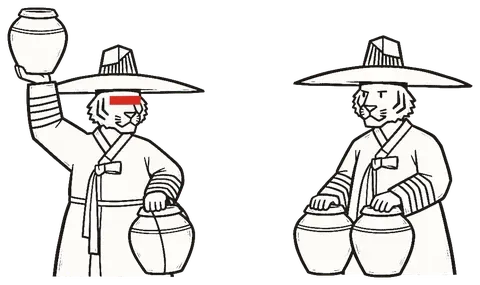
Two cups, two jobs
The same two drinks sit on the table. You can rank them, or you can copy a way of drinking.
커피가 차보다 싸요.
keopiga chaboda ssayo — Coffee is cheaper than tea.
보다 sets tea as the baseline. Coffee scores lower on price. A scale is in the sentence: 싸다.
Swap only the particle.
커피를 차처럼 마셔요.
keopireul chacheoreom masyeoyo — I drink coffee like tea.
처럼 does not rank. It copies a manner. No 더. No winner. If you meant “coffee is cheaper,” 차처럼 싸요 is the wrong line. It says coffee is cheap in a tea-like way, which is not a price list.
Height is the trap
형보다 커요 — you are taller than him. The older brother is the mark you passed.
형처럼 커요 — you are tall like him. You copied his size. You did not beat him.
Learners put 처럼 on a ranking they heard in English “like bigger than.” Korean does not stack them that way. 서울처럼 부산이 더 커요 is the broken report if the point was size rank. The rank sentence is 서울보다 부산이 커요.
보다 wants an adjective that can be more: 크다, 싸다, 많다, 좋다. 처럼 wants a picture: 선생님처럼 말해요, 아이처럼 웃어요.
가 often sits on the thing that takes the score: 커피가 차보다 싸요. Coffee is the new information on the scale. 처럼 does not need that contest. 선생님처럼 말해요 has no winner, only a copy. Putting 이/가 on both sides and 처럼 in the middle does not invent a rank you forgot to say.
Do not leave them interchangeable
A cafe menu can take 보다: 이 케이크가 저거보다 달아요. A habit can take 처럼: 한국 사람처럼 젓가락질해요. Same kitchen. Different particle.
If you only remember one test, use this. Is someone winning a scale? 보다. Are you drawing a likeness? 처럼. The sentence that uses the other one is not a softer version. It is the other job.
A last broken line, so the swap stays sharp. 이 가방이 저 가방처럼 더 싸요 tries to rank with 처럼 and 더 at once. If the point is price, say 이 가방이 저 가방보다 싸요. Keep 처럼 for the way you wear it, not for the tag.
Common questions
Do I always need 더 with 보다?
Often, not as a law. 서울보다 커요 already ranks. 더 makes the scale louder. 처럼 does not take 더 as its partner.
Is 같이 the same as 처럼?
같이 can sit near 처럼 for likeness. This page is 보다 against 처럼. Do not use either of them as 보다's twin.
Can 보다 mean to see?
The verb 보다 is a different word. The particle 보다 is 'than.' -어 보다 is 'try.' Do not stack those pages here.
What if both things are equal?
Then you are not ranking. 형만큼 커요 or 형처럼 커요. 형보다 커요 claims you won the scale.


Practice & questions
Try a sentence with an expression from this lesson, or ask about anything you are still unsure of.
Guest comments appear after review. Existing member comments remain attached to their accounts.