
Korean expressions · Guide
How to Say No in Korean: 아니요, 못 해요, and Soft Refusals
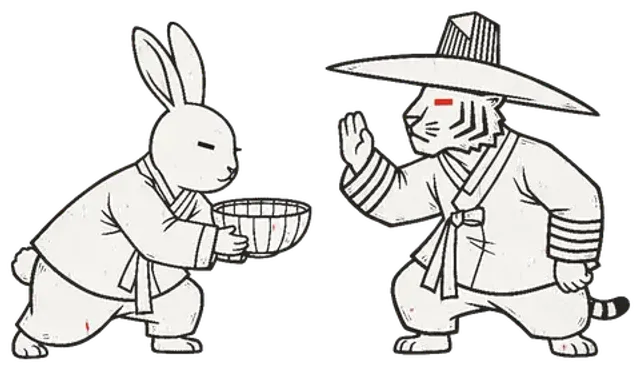
Use 아니요 to answer a yes-or-no question, and 못 해요 when circumstances or ability make something impossible.
Use 안 돼요 for a rule or something that is not allowed. 지금은 좀… and 어려울 것 같아요 can soften a refusal when the situation is clear.
Adapted for English Readers · Beginner
First identify what you are declining
A question, an invitation, an ability, and a rule do not call for the same Korean answer.
아니요. A clear negative answer to a yes-or-no question or a simple offer.
못 해요. You cannot do it because of time, circumstances, or ability.
안 돼요. The action does not work, is not possible, or is not allowed.
A softer sentence can still be clear
You do not need to invent a long excuse. A short limit and, when useful, another option are enough.
For a simple offer, 아니요, 괜찮아요 is a complete and ordinary answer.
For a request or invitation you cannot accept, name the limit: 오늘은 못 가요.
Softening is optional. When a boundary must be clear, say 죄송하지만 안 됩니다.
Choose one line that fits the situation
커피 더 드릴까요? 아니요, 괜찮아요.A polite, direct decline of a simple offer.
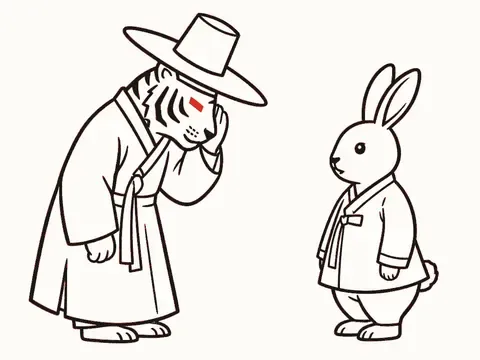
café · visit오늘 저녁에 만날래요? 미안해요. 오늘은 못 가요.You are naming today's limit, not rejecting the person.
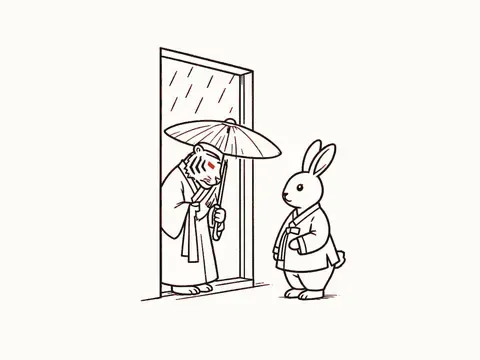
friend · invitation마감 시간이라 지금은 주문이 안 됩니다.A staff member explains a shop rule rather than a personal preference.
shop · ruleSeparate 안 from 못
안 commonly negates a choice or state. 못 marks inability or a situational barrier.
오늘은 못 가요.
아니요
A natural, clear answer to a yes-or-no question.
못 + verb
Use it for a limit involving time, circumstances, or ability.
안 돼요 / 안 됩니다
Common when explaining permission, rules, or practical impossibility.
Keep one distinction
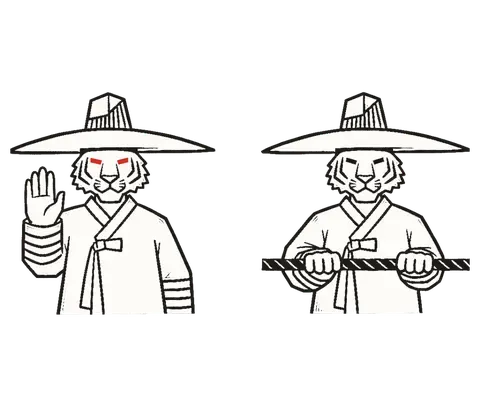
아니요 answers no, 못 해요 names a limit, and 안 돼요 marks a rule or something that cannot be done.
Practice & questions
Try a sentence with an expression from this lesson, or ask about anything you are still unsure of.
Guest comments appear after review. Existing member comments remain attached to their accounts.