
다시 말해 주세요 (Dasi malhae juseyo): Say That Again
Stop the line without pretending. 다시 말해 주세요, 천천히요, 잘 못 들었어요 — repair talk, not a grammar lecture.
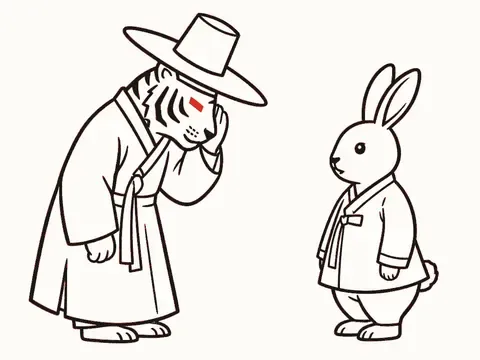
Do not nod past it
The dangerous move is 네 when you heard only the last syllable. The other person will go on. A price, a name, or an exit number will be gone.
Stop the line. You do not need a grammar class in the doorway, and you do not need to explain your whole level. You need one repair.
다시 말해 주세요.
dasi malhae juseyo — Please say that again.
해 주세요 asks them to do the speaking as a favour. 말하다 plus -아/어 주다 plus 세요. It is not a boss command. It is the same stack as 열어 주세요, now aimed at the sentence you missed.
Slow, then write
천천히요 is enough at a counter. The verb is missing and everyone still hears it. The full line is 천천히 말해 주세요.
이름 다시 적어 주세요.
ireum dasi jeogeo juseyo — Please write the name again.
적어 주세요 is the polite request on 적다. Use it for a station exit, a medicine label, a phone number. Sound is the problem; paper is the fix.
한 번만 더요 asks for one more pass, not a lecture. 뭐라고 하셨어요? raises the verb and stays usable with a stranger. 뭐라고요 can land sharp. Keep it for friends.
The problem is your ear
잘 못 들었어요.
jal mot deureosseoyo — I didn’t catch that.
못 들었어요 puts the miss on hearing, not on refusal. 모르겠어요 is “I don’t get it” after you heard the words. Use 못 들었어요 first if the sound failed.
If you name a reason and you apologise, the hinge is -아서/어서: 못 들어서 죄송해요. Do not write 못 들으니까 죄송해요.
영어 할 수 있으세요? is a last tool, not the first. Try the repeat, the slow-down, and the written word before you switch languages. Many counters will already slow down for 천천히요 alone, without a longer speech.
One job: get the line said again, slower, or on paper. Pretending you understood is how you board the wrong bus.
Common questions
Is 네 a safe nod when I did not hear?
It will move the conversation past the word you need. If the next step is a price, an address, or a name, do not nod. Stop the line.
뭐라고요 vs 뭐라고 하셨어요?
뭐라고요 is sharp in some rooms. 뭐라고 하셨어요? raises the verb and stays safer with a stranger. Both ask for a repeat.
Can I ask them to write it?
네. 적어 주세요. Names, station exits, and medicine labels are easier on paper. That is still this page: you did not catch the sound.
Do I apologise first?
A short 죄송한데요 is enough, with -아서/어서 if you name a reason: 못 들어서 죄송해요. Then ask for the repeat. Do not build a speech.

Practice & questions
Try a sentence with an expression from this lesson, or ask about anything you are still unsure of.
Guest comments appear after review. Existing member comments remain attached to their accounts.