
엄마 (Eomma), 형 (Hyeong), 오빠 (Oppa): Korean Address Terms
What you call people inside the family — 엄마 vs 어머니, and 형/오빠/누나/언니 by speaker gender. Titles for non-family and Korean age live next door.
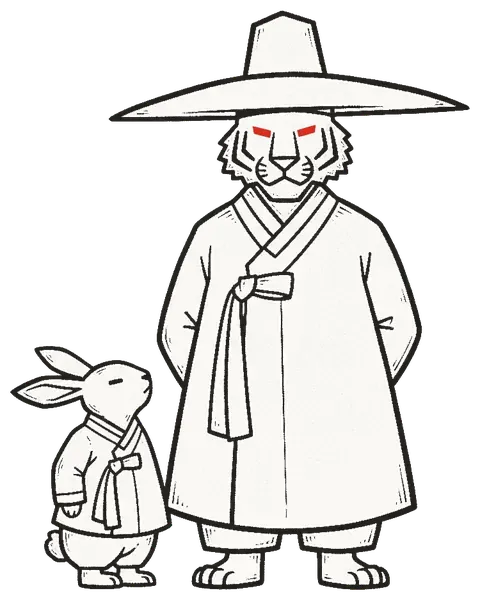
Oppa is what you call an older male who is not necessarily your brother. Korean age is how you know who is older. This page is the house: what you call people inside the family.
Parents
엄마 (eomma) is the everyday word, to her and about her at home. 어머니 (eomeoni) is the word you lift when an outsider is listening — a teacher, a form, a first introduction.
엄마는 집에서 써요. 어머니는 밖에서 올려요. That 은/는 vs 이/가 is the contrast: one word against the other, same person.
아빠 and 아버지 split the same way. 할머니 and 할아버지 are the grandparents. Families differ on how soon a child is asked to switch from 엄마 to 어머니; the direction of the switch does not.
저희 어머니예요.
jeohui eomeoniyeyo — This is my mother.
예요 is 이다 after a vowel. 저희 is the humble our. Korean also says 우리 엄마 even when the mother is only yours. 우리 here marks the family, not a shared parent.
Brothers and sisters
The four older-sibling words still care about the speaker’s gender. A woman says 오빠 for an older brother and 언니 (eonni) for an older sister. A man says 형 (hyeong) and 누나 (nuna). Revised Romanization is hyeong and eonni, not hyung or unnie.
That grid is the same mechanism the oppa page teaches for friends. Inside the house it is simply the word for that sibling. 동생 does not split by speaker. 남동생 and 여동생 add sex when the sentence needs it.
언니한테 말했어요.
eonnihante malhaesseoyo — I told my older sister.
한테 is the spoken person-marker, 에게, 한테. The speaker of that sentence is female. A brother telling the same sister would have said 누나한테.
Aunts and uncles
The parent’s side is built into the word. 이모 is mother’s sister. 고모 is father’s sister. 삼촌 is father’s brother. 외삼촌 is mother’s brother — 외- marks the mother’s side.
You do not reuse 언니 or 오빠 for an aunt or uncle. Those stay in the sibling row, or they leave the house and become the social titles on the oppa page.
Common questions
Can a man call his brother 오빠?
Not as his own word. He says 형. The only time he produces 오빠 is when he is quoting a sister or naming the word. [What 오빠 means outside the house](/posts/oppa-meaning/) is a different job of the same syllables.
엄마 to her face, 어머니 to other people?
That is the usual split. Some families use 어머니 at the table too. 엄마 to a teacher about your mother can sound like you never raised the word.
What about younger siblings?
동생 is the word, and it does not encode the speaker's gender. 남동생 and 여동생 add sex when you need it. You often just use the name at home.
Why do titles depend on birth year?
Because Korean age, not a big gap, decides who is older. [How age is counted](/posts/korean-age-system/) is that half. This page is only what you call people once the year is known.


Practice & questions
Try a sentence with an expression from this lesson, or ask about anything you are still unsure of.
Guest comments appear after review. Existing member comments remain attached to their accounts.