
은/는 vs 이/가: Same Sentence, Different Job
Someone asks who came. Swap 민수가 and 민수는. One answers. The other starts a contrast. This is not 'both are fine.'
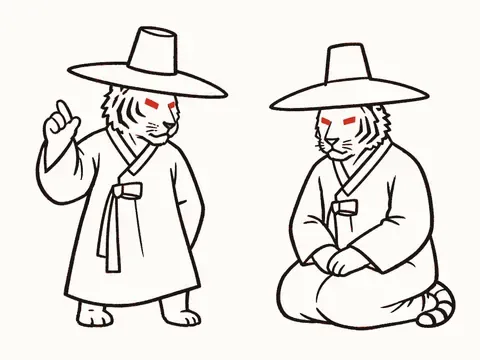
Who just walked in
The door opens. Someone in the room asks 누가 왔어요?
민수가 왔어요.
minsuga wasseoyo — Minsu came.
가 marks Minsu as the new information. That is the answer. The question word 누가 is already 이/가. The reply keeps the same job.
Swap only the particle.
민수는 왔어요.
minsuneun wasseoyo — As for Minsu, he came.
는 puts Minsu up as a topic and quietly contrasts him. The room now waits for the other half: 유나는 안 왔어요. If nobody else was in play, this line is the wrong first answer. It is not a polite variant of 민수가 왔어요.
After the name is known
Minsu is already in the room. Now you split what people ordered.
민수는 커피 시켰어요. 유나는 차 시켰어요. 은/는 is doing the work it exists for: same situation, two sides. You would be wrong to say 민수가 커피, 유나가 차 here if both names are old news and the point is the contrast. 이/가 would present each order as a fresh discovery, as if the room had not been talking about those two people.
That is the swap to feel. Same verbs. Same names. The particle tells the listener whether you are filling a blank or drawing a line.
The who-question that traps 저
누가 선생님이에요?
제가 선생님이에요. That is the answer. 저 plus 가. You are the new information.
저는 선생님이에요 is a different speech. It sets you up as a topic: as for me, I am a teacher. It belongs in a self-introduction, or next to 유나는 학생이에요. It is the wrong first reply to 누가.
A thing on the table works the same way. 이게 뭐예요? wants 이게 사전이에요. 이거는 사전이에요 already treats the object as a topic, as if you were about to say what the other thing is not.
Do not leave this page thinking both are fine. If the other person asked who, and you answer with 은/는, you changed the question. You started a contrast they did not ask for.
Common questions
Textbooks say topic versus subject. Is that enough?
It names the labels. It does not tell you which one answers 누가. Use new information for 이/가, topic-plus-contrast for 은/는.
Can 은/는 ever be the first mention?
In a contrast setup, yes: 커피는 있어요, 차는 없어요. That sentence is already splitting two known drinks. It is not answering who arrived.
제가 or 내가?
제가 is the polite 이/가 form of 저. 내가 is 반말. The particle job is the same. This page stays in 해요체: 제가.
What if nobody asked a question?
Then look at the job. First time this person matters in the talk: 이/가. You are now talking about them against someone else: 은/는.


Practice & questions
Try a sentence with an expression from this lesson, or ask about anything you are still unsure of.
Guest comments appear after review. Existing member comments remain attached to their accounts.