
어디예요 (Eodiyeyo), 어떻게 가요 (Eotteoke gayo): Asking the Way
Where it is, and how you get there. 에 vs 에서, 왼쪽으로, 직진 — street talk, not the subway transfer page.
Two questions
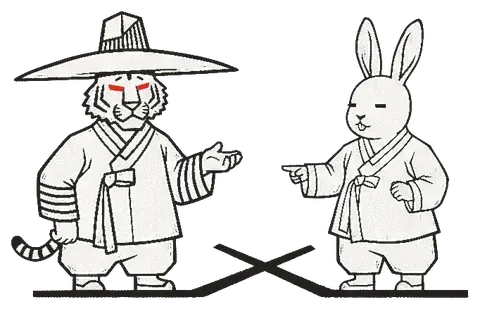
Two questions split. 어디예요? asks where a thing sits. 어떻게 가요? asks the path.
화장실이 어디예요?
hwajangsiri eodiyeyo? — Where is the toilet?
You want a location. The answer may be 저쪽이에요, 복도 끝에 있어요, 2층에 있어요. 에 marks the place something is.
에 and 에서
서울역에 어떻게 가요?
seoulyeoge eotteoke gayo? — How do I get to Seoul Station?
Now the verb is 가다, so 에 is the destination you move toward. 서울역에서 가요 can sound like you are leaving from the station. 에서 is the scene of an action, or the starting point. Mixing the two is the particle error this page exists to stop.
Left, right, straight
People answer with a direction, not a map speech.
이쪽으로 직진하다가 왼쪽으로 가세요.
i jjogeuro jikjinhadaga oenjjogeuro gaseyo — Go straight this way, then go left.
(으)로 marks the direction you take. 왼쪽으로, 오른쪽으로, 이쪽으로. 직진 is go straight. 건너편 is across. 옆에, 앞에, 뒤에 locate against another thing, and those take 에 because they sit, they do not walk.
여기에서 가까워요? measures from here — 에서 again. 멀어요 is far. 도보로 오 분 is a walking five minutes, Sino-Korean on the minute, the same split as telling time.
Landmarks
If you did not catch the answer, 다시 한 번 말해 주세요 buys a repeat. That line belongs fully on the “I didn’t understand” page. Here it is only the rescue on a street corner.
Landmarks do more work than street names. 편의점 앞에서 오른쪽으로, 큰 사거리에서 직진. 사거리 is a four-way. 골목 is a small alley. 저 신호등까지 가세요 gives a light as the next stop. 까지 marks the end of that stretch, then you ask again if you need the rest.
A building can take 어디예요. A route can take 어떻게 가요. Ask the one you actually need. Subway transfers and exit numbers wait; they are a different page, with a different handful of words. Those words are 환승 and 몇 번 출구, and they do not replace 왼쪽으로 on the pavement. If a stranger starts drawing, you can still walk the first 로 they named.
Common questions
어디예요 or 어디에 있어요?
Both ask where something is. 어디예요 is shorter. 어디에 있어요 uses 에 plus 있다 for a thing that sits in a place. People say both on the street.
Is this the subway lesson?
No. This page is a street or a building: left, right, straight, next to. Transfer and exit numbers are a later lesson.
가까이 vs 멀어요?
여기에서 가까워요? asks if it is near from here. 에서 marks the point you measure from. 역에서 멀어요 — far from the station.
건너편?
The other side of the street, or across from that shop. 은행 건너편에 있어요. 에 again, because you are locating, not walking the path yet.


Practice & questions
Try a sentence with an expression from this lesson, or ask about anything you are still unsure of.
Guest comments appear after review. Existing member comments remain attached to their accounts.