
Jonbeo Meaning: Korean Slang for Holding Through a Loss
존버 means refusing to sell through an investment loss. Learn its coarse origin, its connection to HODL, and when not to use it.
⚠️ Coarse slang — fine in trader chat; not for formal, workplace, or mixed company.
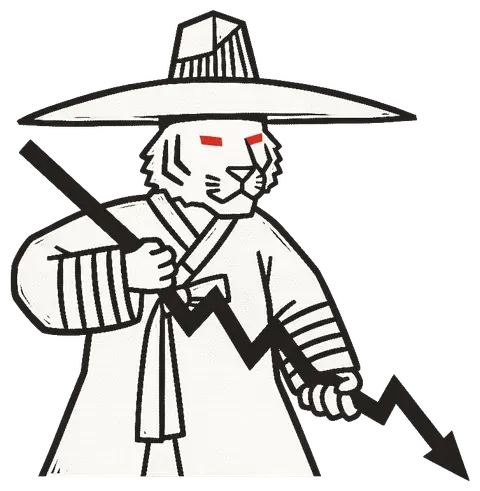
존버 is what comment sections yell when the line goes down and nobody sells.
What does jonbeo mean in Korean? Hold on — especially through an investment loss. English speakers often map it to HODL, with Korean spiciness in the etymology: a coarse intensifier clipped onto 버티다 (to endure).
Where it lives
Born on stock and crypto boards, then borrowed by game chats and everyday grind talk. Headlines still use it when a popular ticker bleeds and retail refuses the exit.
물려도 존버한다.
Even stuck in the red, I’m holding.
-어도 = even if. Progressive -고 있다 for the ongoing stubbornness:
지금도 존버하고 있어. — Still holding right now.
Contrast with selling:
손절은 못했고, 존버만 하고 있어.
Couldn’t cut losses — only holding.
은/는 sets the two strategies apart: 손절은… 존버는…
Who says it to whom
Traders to traders: native habitat — shared pain, shared joke.
Stream chat during a losing fight: borrowed bravado.
Financial advisor in a formal report: they will paraphrase (장기 보유, 손절 보류). The clip itself is too board-culture.
You → a friend who just lost rent money: cruel. The word can sound like you are laughing at the bleed.
When not to use it
- As medical or relationship advice (“just 존버 the breakup”).
- To shame someone who already sold — 손절 is a tool, not a character flaw.
- When the reason for owning the asset no longer holds — then 존버 may simply delay a necessary decision.
- In mixed company where the coarse root still stings.
Learner move
Read it in market Korean, but do not treat it as a virtue word. The useful pair beside it is 손절. If you only learn 존버, you will miss half the argument Korean investors actually have: hold through a loss versus accept the loss and sell.
Common questions
Is the etymology polite?
No — it clips a coarse intensifier + 'hold'. Many speakers still say it; finance columns sometimes soften the gloss to 'stubborn holding'.
Is 존버 always smart?
Analysts often say no. Holding an investment whose underlying case has failed is not the same as waiting through a temporary dip.
Outside stocks?
Gamers and ordinary chat use it for any 'I'm not quitting this grind' moment.
Say it to a grieving friend who lost money?
Usually no. Empathy first — the word can sound like mockery of their pain.
Sources
Written as educational material for Korean learners. Sources for the facts are below:
Practice & questions
Try a sentence with an expression from this lesson, or ask about anything you are still unsure of.
Guest comments appear after review. Existing member comments remain attached to their accounts.