
-더니 vs -었더니: Watched It, or Did It Then Found
The dog ran all day, then slept: 뛰더니. You opened the door and found a cat: 열었더니. Same 더니 letters, two stories.
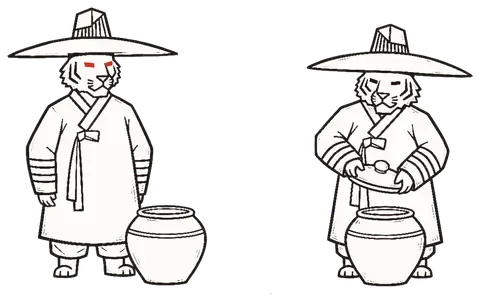
You watched the day
A kid has been outside since morning. Now the house is quiet.
하루 종일 뛰어다니더니 지금은 자요.
haru jongil ttwieodanideoni jigeumeun jayo — Ran around all day, and now is asleep.
더니 hangs a past situation you could see, then the sequel. Classroom drills keep that participant in both halves. The running is not “I ran, then I discovered sleep.”
Swap in the past-marked twin.
하루 종일 뛰어다녔더니 지금은 자요.
That line asks the other story: you did the running, then found the sleep. If you were only watching the kid, it is the wrong hinge.
You did it, then found it
The door was closed. You opened it.
문을 열었더니 고양이가 들어왔어요.
muneul yeoreotdeoni goyangiga deureowasseoyo — I opened it, and a cat came in.
었더니 is the past-marked chunk. Discovery stories live here: 가봤더니 휴일이었어요. 검색해 봤더니 후기가 좋았어요. You acted. Then the world answered.
문을 열더니 고양이가 들어왔어요 puts the opening in the watched-situation seat. If your hands turned the handle, classroom Korean wants 열었더니. Do not borrow 더니 because the letters look cheaper.
Weather makes the same cut. 날씨가 춥더니 눈이 왔어요 watches the cold, then the snow. 창문을 열었더니 추웠어요 is your act, then the cold you met. 열어서 들어오세요 is a different error: -아서 cannot sit in front of a command. That job is -(으)니까, and it is not this page.
Same medicine, two seats
약을 먹더니 좀 괜찮아졌어요 — you watched them take it, then they looked better.
약을 먹었더니 머리가 덜 아파요 — you took it, then you felt the change.
Do not leave the page thinking both are fine if you add 요. One form watches a past scene onward. The other marks your act, then the find. Pick the story first. The letters 더니 will try to fool you. They are not a style pair. If you only remember one failed line, remember 열더니 said with your own hand still on the door. That is the seat that belongs to 열었더니.
Common questions
Is there a hard same-subject law?
The dictionary does not print one. Classroom drills often keep one participant on -더니 and use -었더니 for a discovery after your act. Follow that in practice. Do not invent a wider law.
Can -더니 follow -었-?
Morphologically yes, and that chunk is taught as its own page: -었더니. Do not build it by accident and call it -더니.
What about 약을 먹더니 괜찮아졌어요?
That line watches the taker, then the sequel. 약을 먹었더니 머리가 덜 아파요 is your act, then the result you felt. Same medicine, two seats.
Is this just -아서?
-아서/어서 is general cause, and it cannot take past or a command. -더니 carries a past-observation colour. Do not swap them to sound nicer.
Practice & questions
Try a sentence with an expression from this lesson, or ask about anything you are still unsure of.
Guest comments appear after review. Existing member comments remain attached to their accounts.