
-았/었- vs -던: Finished Event, Open Scene
You went to that cafe. 갔어요 closes the visit. 가던 카페 keeps the scene open. Swap them and the time-shape changes.
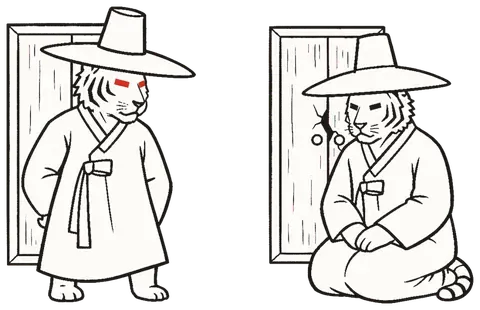
The visit closes
Someone asks where you were yesterday.
그 카페에 갔어요.
geu kapee gasseoyo — I went to that cafe.
갔어요 finishes the trip. The event is closed. You can sit down. Nothing is left hanging.
Swap the ending for the modifier that holds a scene.
가던 카페예요.
gadeon kapeyeyo — It is the cafe I was going to / used to go to.
던 does not close a visit. It hangs the going on the noun. The cafe is the one from an unfinished walk, or from a habit. If yesterday you simply went, sat, paid, and left, 가던 카페예요 is the wrong first report. It is not a softer 갔어요.
One day versus the old route
어제 그 학교에 다녔어요 is already odd if you mean a single visit. 다니다 is a habit verb. 다녔어요 can close a period: you attended, and that stretch is done.
다니던 학교 is the school of that habit while it was still a scene — the one you were attending, or used to attend, when something cut across it. The noun is open. The finite past is not sitting on 다니던.
Same food, two shapes. 빵을 먹었어요 — you finished the bread, or at least the eating is reported as done. 먹던 빵 — the bread you were in the middle of, or the kind you used to eat. Putting 먹던 on a plate you cleared, when you only mean “I ate it,” is the swap that fails.
The line that is not past tense
어제 친구를 만나던. As a complete report, that line is broken. -던 is waiting for a noun, or for a scene you will keep open: 만나던 친구, 만나다가 멈춘 자리. The closed meeting is 만났어요.
Do not leave this page thinking -던 is how you make yesterday sound thoughtful. If the event is done and you are not modifying a noun, pick -았/었-. If you need the old route or the interrupted plate, pick -던 and give it a noun. The two forms are not polite twins.
Common questions
Is 던 just a fancy past tense?
No. -았/었- finishes a clause. -던 turns the past into a modifier for something unfinished, interrupted, or habitual. Different slot.
What about 먹었던?
That is -었던, a later layer. This page stays on bare -던 against finite -았/었-. Do not treat 었던 as the everyday twin of 갔어요.
Can I say 어제 갔어요 about a cafe and later 가던 카페?
Yes, because the jobs differ. The first line closes one visit. The second names the cafe as a habit or an unfinished route. Same place, two time-shapes.
Does -던 take past tense on itself?
The stem is present-looking: 가던, 먹던. Do not build 갔었던 here. That is a different page.



Practice & questions
Try a sentence with an expression from this lesson, or ask about anything you are still unsure of.
Guest comments appear after review. Existing member comments remain attached to their accounts.